
Is manual expense tracking worth the effort?
It takes longer than 21 days to build a habit. How to make recording every payment stick, and what tracking spending by hand gives back.

Panos
· 6 min read
In this post
You start a new budgeting app on a Sunday, full of good intentions. By Thursday you’re three days behind, and catching up means sitting with a statement, trying to remember what CARD PMT 4829* was. A week later, the app is still on your phone. You just don’t open it anymore.
That’s the moment people quit, and Quidough is built around the very thing that causes it. Every transaction in it is one you typed in yourself. We chose that on purpose, so we owe you a plain answer about why, and about who it suits.
The objection is fair
Manual expense tracking takes effort every day, and that effort competes with everything else in your day. Miss one day and it’s easy to miss a week. Miss a week, and your reports stop telling the truth, because a gap in the record looks exactly like money you didn’t spend. Software that pulls transactions in for you takes that daily effort away, and that’s a real advantage. We know what the effort costs, because we’ve recorded our own money by hand for more than 10 years. We kept going because of what it gives back.
What the effort gives back
Paying with a card or a phone barely registers. A 2025 study on what its authors call Spendception found that digital payments make buying feel less noticeable, and linked that to more impulse buying. The small sting of handing over cash, what researchers call the pain of paying, mostly goes away.
Writing a payment down brings some of it back. Yiling Zhang at the University of Wisconsin-Madison studied this in two parts. People using a Chinese money app who recorded their expenses by hand tended to spend a smaller share on discretionary things, and adjusted their budgets as they went. A survey of people in the US then compared ways of tracking. Automatic tracking went with paying less attention and knowing less about your own spending. Manual tracking went with more of both. The full dissertation has the detail.
Both studies show associations, not cause and effect. The people in them chose to track, and nothing here says Quidough will make you spend less. What the research does support is the part we care about: when you record it yourself, you notice it.
That noticing is what Quidough is for. It’s there to help you understand your money, and like most things worth understanding, it asks you to take part. You don’t feed it something and get back numbers that might be true. Every line is one you put there, in your own words, so you know where each one came from.
How to make expense tracking a habit
Most of what you spend happens in a handful of familiar places: the supermarket, the café on the way to work, the pharmacy, filling up the car. Each of those already comes with a moment that repeats every time you pay, and a habit needs something like that to hang on.
Psychologists call this an if-then plan: you tie the new behavior to a cue that’s already there. Some people call it habit stacking. A 2006 review of 94 studies found that people who made one were noticeably more likely to reach their goals than people who only set the goal. “I’ll keep track of my money” is a goal. “When this happens, I record the payment” is a plan.
Our own cue is the receipt. Most of the time, the two of us record a payment while we wait for the cashier to hand it over, and it takes a few seconds. Some days that doesn’t work. We’re paying for several things at once, it’s raining, or there’s a long queue behind us. That’s ordinary daily life, and it’s exactly the kind of thing that pulls you out of a habit. So we have a second cue: we keep the receipt, and the moment we’re back in the car or home, we record it. It’s rare for a morning payment to wait until the evening, though that happens too.
When you pick your own cue, pick a backup with it. The first one won’t fit every day, and a second one keeps a busy afternoon from turning into a gap.
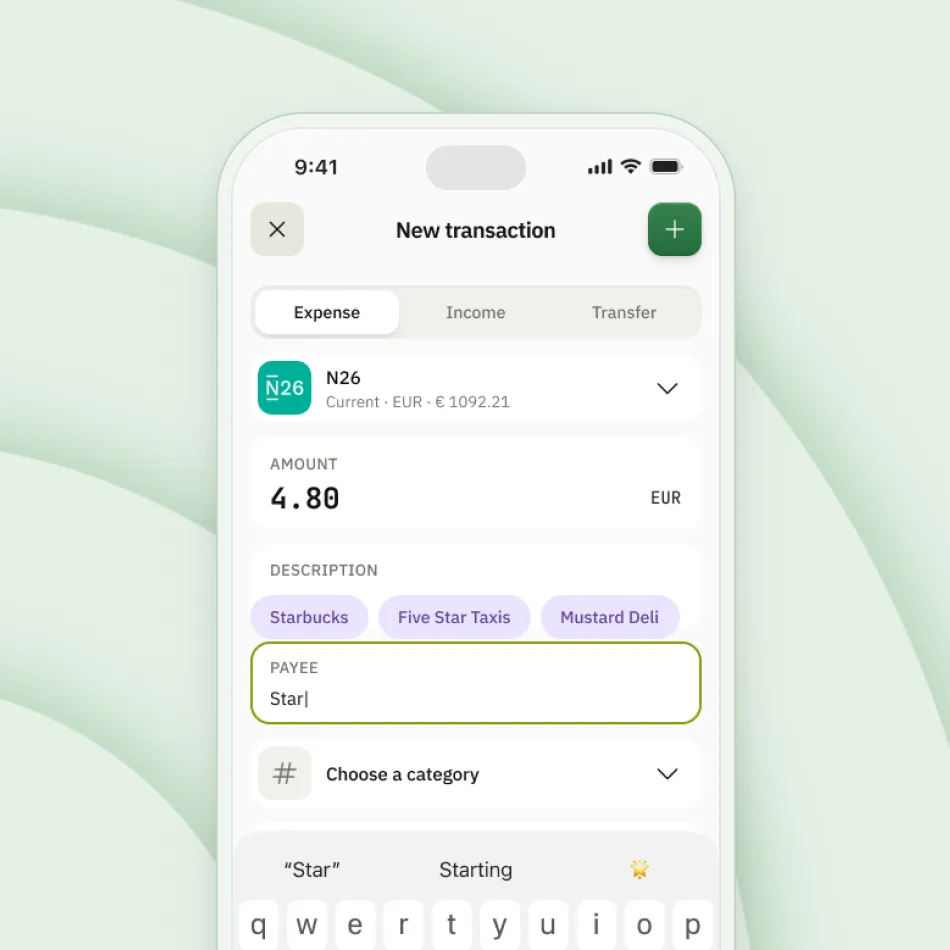
Those few seconds at the counter only work if recording is quick, so that’s where we put the effort. A payment takes a couple of taps. The café you stop at every morning only needs typing out once. Next time, start typing its name in the payee field, pick it from the suggestions, and Quidough fills in the description and category from the last time you paid there.
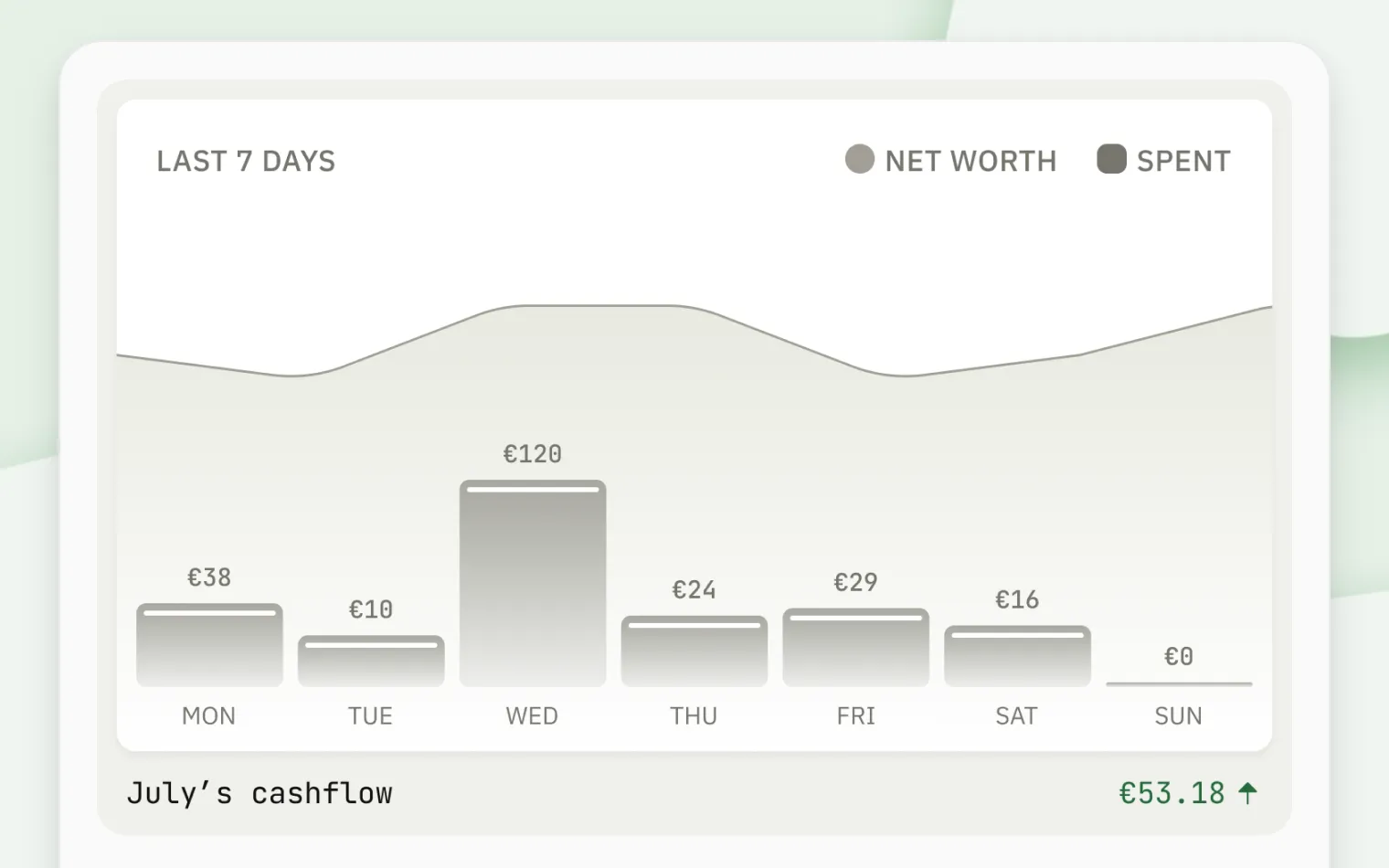
And you see the result straight away. Each payment lands on the daily bar chart the moment you record it, where a heavy day sits right next to a quiet one, so by Friday you already know which days cost you the most.
Is it for you?
A habit of noticing where your money goes is worth building whatever you use to do it. A notebook works, and so does a spreadsheet. Quidough is our way of making that habit calmer, quicker, and easier to share with the people you share money with.
If you’d rather your transactions arrived on their own, a different kind of app will probably suit you better, and that’s fine. The same goes if you want to start by loading years-old statements. In Quidough, you add your transactions yourself, beginning on the day you start.
Quidough suits people who would rather know than guess, and households that want one set of numbers they all trust. In ours, we both record, and every payment lands in the same household, so we’re always reading the same page. If you share money with someone, invite them to your household and you’ll both work from the same accounts. Those numbers only exist because someone recorded them, so the habit comes first, and the app is there to make it easier to keep.
How long it takes to build the habit
You’ve probably heard that it takes 21 days to form a habit. The best-known study on the subject found something slower and less tidy. Phillippa Lally and her team at University College London followed 96 people building a new daily habit for 12 weeks. On average, it took 66 days for the behavior to become automatic, with a range from 18 days to 254. The early repetitions brought the biggest gains, and missing a single day didn’t meaningfully set the habit back.
How long it takes also depends on the habit. A 2023 study that tracked gym visits and hospital handwashing found the gym habit took months to form, while handwashing took weeks. The researchers think simpler, more frequent behaviors become habits faster. Recording a payment sits closer to washing your hands than to going to the gym: it’s small, and it happens several times a day.
That’s why our free trial runs for 30 days instead of the usual 7 or 14. A month won’t make recording automatic for everyone, but it covers the stretch where a habit gains the most, and it leaves you with a full month of your own numbers to look at. If you find yourself three days behind on a Thursday, catch up and carry on. One missed day doesn’t undo the rest. And if, after a month, the habit hasn’t taken hold, there’s no point in paying for an app that depends on it.
Next time you’re waiting for a receipt, try recording it in Quidough. The first month is free, and you don’t need a card to start.